
Ship Channel Collisions & Barge Accidents: How Texas Maritime Law Protects Injured Crew
Ship Channel Collisions & Barge Accidents: How Texas Maritime Law Protects Injured Crew

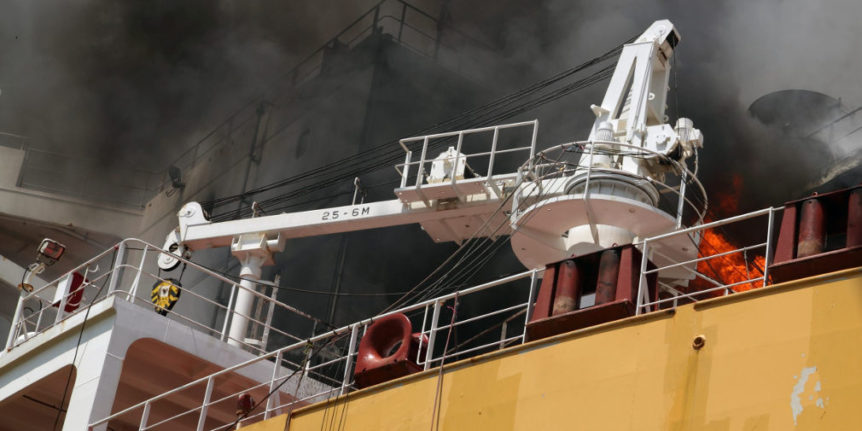
The Houston Ship Channel is one of the busiest, narrowest, and most congested commercial waterways in the world. Tankers, cargo vessels, tugs, and multi-barge tows move in close proximity through tight fairways with swift tidal currents, heavy commercial traffic, and volatile weather.
When a collision, allision (striking a stationary object), or wake accident occurs, the kinetic forces involved are immense. Deckhands, tankermen, pushboat operators, and harbor workers often suffer life-altering trauma: crush injuries from parted towing cables, blunt-force impact from shifted cargo, severe burns from combustible cargo spills, and hypothermia or drowning risks.
After a major waterway collision, maritime employers and vessel operators frequently attempt to minimize liability by hiding behind complicated maritime rules. Understanding how federal maritime law and the Jones Act determine fault—and why vessel operators cannot simply blame “bad weather” or “unavoidable river currents”—is essential to protecting your physical and financial future.
The Jones Act & Employer Negligence in Waterway Collisions
Under traditional land-based law in Texas, an injured employee is often restricted to workers’ compensation. Federal maritime law operates differently.
Under The Jones Act (46 U.S.C. § 30104), qualifying seamen injured due to an employer’s negligence have the explicit legal right to sue their employer for full compensatory damages. Unlike standard civil litigation where you must prove substantial fault, the Jones Act applies a lower standard of causation (often called “featherweight” causation). An employer is liable if their negligence played even the slightest part in producing your injury.
In the context of Ship Channel and river collisions, employer negligence frequently includes:
- Operating with Inadequate Lookout: Failing to maintain a dedicated, qualified watchman during low-visibility fog, heavy rain, or congested river turns.
- Crew Fatigue & Coast Guard Watch Violations: Pressuring tug and barge crews to work continuous hours beyond statutory limits to meet loading dock deadlines.
- Failure to Utilize Navigational Radar & AIS: Ignoring automatic identification systems (AIS), electronic chart displays, or failing to make mandatory passing agreements via VHF radio.
- Improper Rigging & Defective Towing Gear: Using worn face wires, degraded towlines, or damaged winches that snap under the sudden tension of collision maneuvers.

Proving Vessel “Unseaworthiness” in Channel and Bay Accidents
Beyond employer negligence, injured crew members can bring an unseaworthiness claim against the vessel owner. Vessel owners have an absolute, non-delegable duty under federal maritime law to ensure the vessel, its hull, its machinery, and its entire crew are reasonably fit for their intended voyages.
A vessel may be deemed unseaworthy in a collision context if:
- Steering, engine telegraphs, or propulsion thrusters failed due to neglected maintenance.
- The vessel was operated by an undermanned, untrained, or improperly licensed crew.
- Towing bitts, capstans, or cleats parted under operational tension.
- Critical emergency gear, life rafts, or fire suppression systems were inoperative.
Unseaworthiness is a strict liability concept—meaning you do not have to prove the vessel owner knew the condition was dangerous, only that the unseaworthy condition caused or contributed to your injury. Explore our Maritime Law Category for more insights into offshore vessel regulations.
Multi-Vessel Liability: When Another Vessel Causes the Crash
Many Ship Channel collisions involve multiple vessels operated by different shipping conglomerates, tug companies, and foreign-flagged operators.
If your injury was caused or worsened by another vessel’s violation of the Inland Navigation Rules (such as failing to maintain a safe speed, failing to signal a port-to-port passage, or navigating on the wrong side of the fairway), you can pursue a third-party general maritime negligence claim under our broad practice areas.
This enables you to recover damages outside of workers’ compensation limits, including:
Medical Recovery & Rehab:
Full coverage for past, present, and long-term specialized trauma therapy, surgeries, and rehabilitation.
Lost Wages & Earning Capacity:
Recouping lost maritime income and projected financial losses if you cannot return to sea.
Pain, Suffering & Anguish:
Compensation for physical agony, disfigurement, and emotional trauma caused by catastrophic impacts.
Maintenance & Cure:
Daily living expenses and full medical treatments until maximum medical improvement (MMI) is achieved.
Steps to Take Immediately Following a Ship Channel Accident
Maritime corporations, protection and indemnity (P&I) clubs, and company investigators deploy legal teams to the dock before the damaged vessel is even cleared. To protect your rights:
- Demand Immediate, Independent Medical Care: You have the legal right under maritime law to select your own treating physician. Do not rely solely on company-contracted clinics that prioritize rushing you back to sea.
- Report the Incident & Log Records: Ensure the collision and your injuries are logged accurately in the vessel’s official logbook. Describe the events truthfully without speculating or accepting personal blame.
- Preserve Digital & Physical Evidence: Request that vessel AIS recordings, voyage data recorder (VDR) logs, VHF radio transmissions, and engine room bell books be preserved immediately.
- Decline Recorded Interviews or Early Waivers: Never sign releases, medical authorization forms, or give recorded statements to insurance adjusters before consulting a dedicated maritime trial lawyer.

Trial-Ready Representation for Injured Gulf Coast Seamen
Litigating a maritime collision against multi-billion-dollar cargo companies and marine transport operators requires rapid preservation of federal evidence and seasoned trial experience. As a former undefeated prosecutor, Aaron Perry prepares every case for the courtroom to maximize leverage and secure the full recovery your family deserves.
Don’t Let a Corporate Shipping Company Minimize Your Recovery
Our legal team is standing by 24/7 to protect your rights, audit vessel logs, and hold negligent maritime fleets accountable.